
Accountable2You
Accountable2You, LLCLifestyle
4.0120.00 Reviews
- Version
- 1.232-googleplay
- Installs
- 50.00K
- Age Rating
- Everyone
Screenshots
Our Review of Accountable2You
 Analysis by Appyee
I approached Accountable2You as a lifestyle app rather than something to open for entertainment. Its purpose is tied to personal responsibility and transparency, so its value depends less on a burst of novelty and more on whether it becomes part of a routine you can honestly maintain. After spending time with it, my impression is that it is most useful for people who have already decided what kind of accountability they want and are willing to keep that commitment visible.
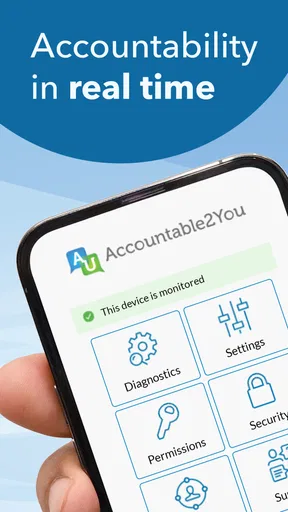
The app comes from Accountable2You, LLC, and its simple promise is easy to understand: live with nothing to hide. That idea can sound powerful, but it also sets a high bar. An accountability tool is only helpful when the user accepts the process, understands what is being shared, and keeps using it after the initial motivation fades. I found that this is where the app deserves the closest look.
What feels useful during the first week
The first week is likely to be the most emotionally noticeable part of using this app. Setting up an accountability arrangement makes ordinary phone and computer habits feel more deliberate. Instead of treating digital activity as something private and automatic, I had to think about what I was doing, why transparency mattered, and who would help me stay consistent.
That change in mindset is the app’s strongest early benefit. It does not need to entertain me to be useful. Its role is to add a pause between impulse and action. For someone trying to reduce harmful browsing, avoid secretive behavior, or follow a personal commitment, that pause can matter more than a complicated collection of tools.
A realistic example would be someone who has promised a partner, mentor, parent, or trusted friend that they will be more open about their online habits. The app can become part of the agreement rather than leaving the promise at the level of conversation. If I were using it in that situation, I would discuss expectations before installing it: what accountability means, how often we will talk, what kinds of activity deserve attention, and how the arrangement should be handled when something uncomfortable appears.
That conversation is important because the app cannot create trust by itself. It can support a clear agreement, but it cannot replace one. If the other person is expected to monitor everything without context, the result may feel more like surveillance than support. I would recommend defining the purpose first and using the app to reinforce that purpose, not as a substitute for communication.
The free entry point makes it easier to try the basic experience without making an immediate financial commitment. The app is free to install, while in-app purchases are listed at $14.99 per item. That distinction matters for anyone comparing it with ordinary screen-time tools, because the initial test is accessible but a longer-term setup may involve paid choices depending on what the user needs.
Its Everyone age rating also makes the app approachable for households that want a straightforward accountability discussion across age groups. Still, an age label should not be confused with suitability for every family dynamic. Younger users need an adult who can explain the arrangement calmly, avoid humiliating them, and treat reports as a starting point for guidance rather than automatic proof of wrongdoing.
One practical tip I would give new users is to avoid checking constantly during the first few days. Excessive checking can turn accountability into anxiety. A better approach is to agree on a regular review moment, then use what appears there to identify patterns and make a small adjustment. That keeps the app connected to behavior change instead of turning it into another source of digital compulsion.
The app’s current version is 1.232-googleplay, and it requires Android 7.0 or later. That makes it compatible with a broad range of Android devices, including phones that are not especially new. Before relying on it as part of an important accountability plan, I would still install it on the specific devices that matter and make sure the experience fits the household’s routine.
Why the initial setup can feel motivating
The first-week appeal comes from visibility. A private intention can be postponed indefinitely, while an agreed accountability process creates a reason to act today. That is especially useful for people who have already tried willpower alone and found that it disappears when they are tired, stressed, or unsupervised.
I also like that the app belongs in the lifestyle category rather than presenting itself as a game or a productivity contest. There is no need to chase points or maintain a public streak. The focus is more serious: building a structure around choices that the user wants to make consistently.
However, this seriousness can make the first week feel heavy. Someone who only wants a gentle reminder to put their phone down may find the accountability approach excessive. A regular digital wellbeing dashboard could be a better fit if the goal is simply to limit time, understand usage, or create quiet hours without involving another person.
What remains valuable after the novelty fades
The real test begins after the first week. Most accountability systems feel helpful while motivation is fresh. The harder question is whether the app continues to offer a reason to return when life becomes ordinary again. In my view, its month-to-month value depends on whether the user turns it into a predictable review habit.
For long-term use, I would not treat every report or notification as an event. I would use the app as one part of a weekly or biweekly conversation. The purpose would be to spot changes, discuss difficult moments, and decide whether the current boundaries still make sense. This approach reduces the chance that accountability becomes a daily argument about isolated actions.
A useful workflow is to separate facts from interpretation. First, look at what the app presents. Then ask what was happening at that time. Was the behavior connected to work, loneliness, stress, boredom, or a legitimate need? Without that second step, a record can be technically accurate yet emotionally misleading. The strongest use of the app is not catching a person out; it is helping them understand the situations in which they struggle.
This is also where it compares differently with common alternatives. Built-in digital wellbeing features usually focus on duration, app limits, notifications, and personal self-control. Website blockers tend to focus on preventing access. A private journal focuses on reflection. Accountable2You sits closer to a shared responsibility arrangement, where another person has a role in the process. That can be more powerful than a personal dashboard, but it also requires more trust and more careful boundaries.
For couples, families, or mentoring relationships, the recurring value can come from having a neutral starting point for a difficult conversation. Instead of relying entirely on memory or suspicion, both people can discuss the same accountability process. That does not eliminate conflict, but it may make the conversation less vague.
For an individual working alone, the value is less certain. If nobody else is meaningfully involved, the app may become another self-imposed system that is easy to ignore. In that case, a simple habit tracker, journal, blocker, or built-in screen-time tool might provide a lighter routine with less administration.
One non-obvious trade-off is that accountability can improve honesty while also increasing the temptation to manage appearances. A user may start thinking about how activity will look instead of why the activity happened. I would counter that by agreeing in advance that an imperfect report is more useful than a spotless one. The goal should be progress and honest discussion, not producing a record that looks ideal.
The app has reached over 50 thousand installs and holds a 4.0 average from around 278 ratings, with roughly 120 written reviews. Those figures suggest a real user base and a generally positive reception, but they should not decide the purchase or installation on their own. Accountability tools are unusually personal: a feature that feels supportive to one household can feel intrusive to another.
How to keep the routine from becoming a chore
I would establish three rules before using it for several months. First, choose one accountability partner who is dependable and emotionally mature. Second, decide when reviews happen so neither person feels watched every minute. Third, define what happens after a difficult finding: a conversation, a change in boundaries, professional help, or simply a note to revisit later.
These rules protect the app from becoming a vague promise. They also make it easier to judge whether it is working. If the same issue appears repeatedly but the conversations never lead to a change, the problem may not be the app. The arrangement itself may need a new goal or a different kind of support.
I would also avoid adding the app to every device casually. The more important the accountability plan becomes, the more disruptive it is if the setup is inconsistent. Start with the devices and situations most connected to the original goal, then expand only when the process feels stable. This is a practical way to reduce setup fatigue and prevent the user from abandoning the whole idea because it became too broad.
The maintenance burden and the reasons fatigue appears
No accountability app is completely hands-off. The largest maintenance burden is not necessarily tapping through screens; it is maintaining the human agreement around the app. Someone has to remain available, conversations have to stay respectful, and both sides need to understand what the system is meant to accomplish.
This can become tiring when the accountability partner treats every unusual item as evidence of failure. It can also become tiring for the user if they feel they must explain normal activity repeatedly. The app is therefore a poor choice for relationships that already lack trust or have a history of controlling behavior. In those situations, more monitoring may intensify the underlying problem rather than solve it.
Another source of fatigue is the emotional weight of repeated review. A person may begin with enthusiasm and then resent the reminder that they are being evaluated. I think the best defense is to make reviews purposeful and limited. Discuss patterns, not every detail. Celebrate honest reporting, not only perfect behavior. If the process never produces encouragement or a useful next step, it needs to be redesigned.
There is also a technical layer to maintain. Phones change, accounts change, and people add devices to their daily lives. Any accountability plan that depends on one setup should be checked after major device changes. I would make a short monthly check part of the routine: confirm that the intended devices are still covered, that the accountability partner knows how to review the information, and that the arrangement still matches the user’s actual needs.
The paid model can add another point of friction. Since the app is free but includes purchases priced at $14.99 per item, I would look carefully at what is included before building a long-term plan around a paid capability. A trial period is useful, but the real decision should be based on whether the chosen setup remains comfortable and valuable after the initial motivation has gone.
Privacy and dignity deserve equal attention. The whole point of accountability is openness, yet openness without limits can be harmful. I would never recommend sharing access casually, using the app to punish someone, or turning it into a condition for ordinary affection or family approval. The healthiest arrangement gives the user a clear path to discuss concerns and revise the process when circumstances change.
One advanced habit that can make the system more sustainable is to record the reason for using it in plain language before beginning. For example, the goal might be to reduce a specific pattern, rebuild trust after a difficult period, or create structure during a stressful transition. Re-reading that reason after a month helps distinguish genuine progress from simple compliance. It also makes it easier to decide when the app has served its purpose and can be used less often.
Who should choose it and who should skip it
I would recommend Accountable2You to someone who wants external accountability, has a willing and trusted partner, and understands that long-term success depends on regular conversations. It can make sense for a person recovering from a repeated online habit, a family creating clearer digital boundaries, or a mentor supporting someone who has asked for structure.
I would skip it if the goal is only to measure screen time, block distractions, or receive private reminders. Those needs are usually better served by built-in phone controls or a focused blocker. I would also avoid it when the proposed accountability partner is unreliable, judgmental, or likely to use information as leverage. The app cannot make an unsafe arrangement safe.
It may also be the wrong choice for someone who dislikes ongoing systems. If installing an app feels like a complete solution but the user has no plan to review it, talk about it, or change habits, the initial setup may provide reassurance without lasting results. In that case, a smaller commitment such as a written rule, a scheduled conversation, or a professional support option may be more effective.
My long-term verdict
After the novelty fades, I see this as a tool whose value comes from the relationship and routine built around it. The app is not compelling because it is fun to open; it is compelling when transparency is genuinely part of the user’s chosen plan. That makes it more demanding than a standard lifestyle tracker, but potentially more meaningful for the right person.
I appreciate the clear purpose, the free starting point, the Everyone rating, and the fact that it runs on Android 7.0 or later. The 4.0 average from its existing audience gives it a reasonable first impression, while the developer’s focused identity makes the app’s direction easy to understand. Still, those positives do not remove the need to think carefully about boundaries, cost, device coverage, and the emotional quality of the accountability relationship.
My strongest recommendation is to begin with a narrow goal and one trusted person. Use the first month to learn whether the process creates honest conversations and useful changes. If it does, the app can earn a lasting place in a personal routine. If it only creates tension, repeated checking, or a feeling of being watched, that is a sign to step back rather than increase monitoring.
In short, Accountable2You is best understood as a support structure, not a magic shield against poor choices. I would recommend it to people who actively want shared responsibility and are prepared to maintain the agreement behind it. For everyone else, a simpler private tool may be less powerful but easier to live with. Its lasting value is real, but only when the habit remains voluntary, respectful, and connected to a goal that matters.
Verdict
Strengths of Accountable2You
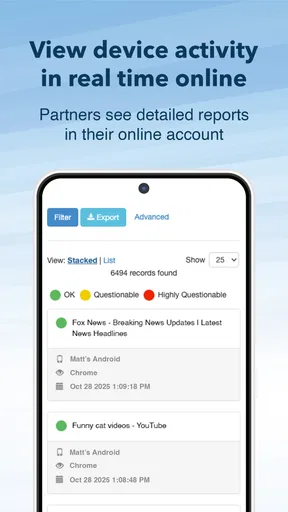
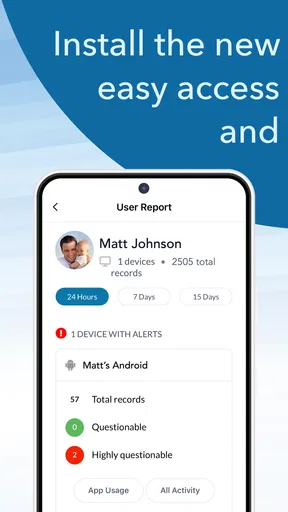
- Detailed activity reports help identify unproductive browsing habits.
- Works across multiple devices for broader accountability coverage.
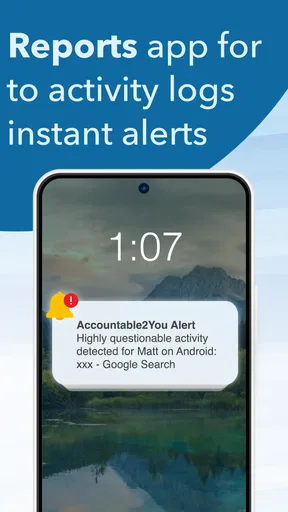
- Supports accountability partners through alerts and shared reports.
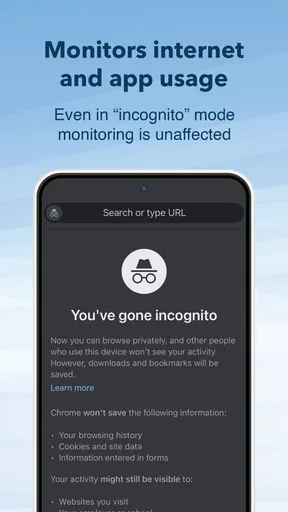
- Website and app monitoring can cover a wide range of online activity.
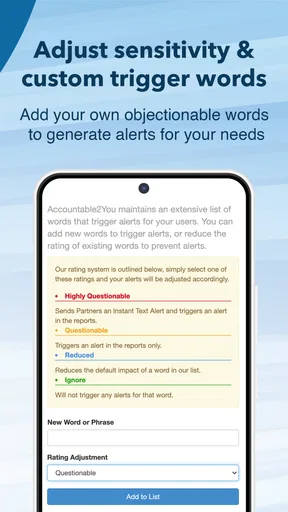
- Useful filtering options help reduce unnecessary or distracting content.
Limitations of Accountable2You
- Some monitoring features may require a higher-priced subscription plan.
- Setup can take time, especially when installing it on several devices.
- Reports may feel intrusive for users who prefer stronger digital privacy.
- Certain device restrictions can vary between Android, iOS, and desktop platforms.
- Dependence on an accountability partner may reduce its value for solo users.
Similar Picks in This Category
View All
SmartThings
Samsung Electronics Co., Ltd.4.6

Google Home
Google LLC4.0

Pinterest4.2

Astrotalk - Talk to Astrologer
Astrology & Horoscope4.7

My Verizon
Verizon Consumer Group4.5

Samsung Wallet (Samsung Pay)
Samsung Electronics Co., Ltd.4.1
Frequently Asked Questions
What is Accountable2You and how does it work?
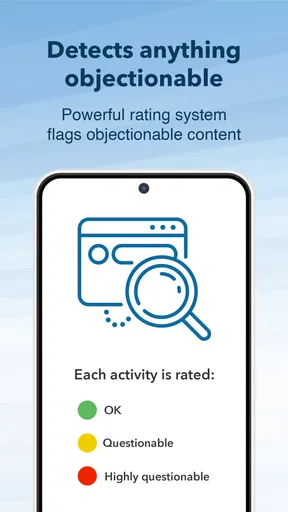
Accountable2You is an accountability and monitoring app designed to help users stay away from unwanted or distracting online content. After installation, it monitors activity on supported devices and browsers, identifies potentially concerning websites or searches, and creates reports that can be shared with a trusted accountability partner. Its purpose is transparency and self-control rather than secretly blocking every form of content.
Which devices and platforms are compatible with Accountable2You?
Accountable2You supports several major platforms, including Android, iPhone, iPad, Windows, Mac, and Chromebook, although available features can vary depending on the operating system and browser. Before downloading, users should check the current compatibility list and device requirements. Some monitoring functions may require additional permissions, browser extensions, or separate setup steps on computers and mobile devices.
Does Accountable2You block inappropriate websites automatically?
Accountable2You primarily focuses on monitoring, reporting, and accountability, rather than functioning as a complete content-filtering service. It can flag activity that may be inappropriate or risky, but users should not assume that every unwanted website will be blocked automatically. For stronger protection, especially for children, it may be helpful to combine the app with device-level parental controls, safe-search settings, or a dedicated filtering service.
Can another person see my Accountable2You activity reports?
Yes. A central feature of Accountable2You is the ability to share activity reports with a trusted accountability partner. Depending on the configuration, reports may include browsing activity, searches, applications, and alerts related to potentially concerning content. Users should choose their partner carefully, discuss privacy expectations in advance, and review the app’s current settings and privacy policy to understand exactly what information is collected and shared.
Is Accountable2You free to download and use?
Accountable2You may be available to download without an upfront charge, but continued monitoring and accountability features generally depend on the subscription plan offered by the service. Pricing, trial periods, supported devices, and included features can change over time. Before installing, review the current information in the Google Play Store, Apple App Store, or official website, and check whether subscriptions renew automatically.
